Internal Audit Culture: From Compliance Exercise to Collective Learning Tool
- May 20, 2026
- Posted by: Thanasis Stathopoulos
- Category: Industrial
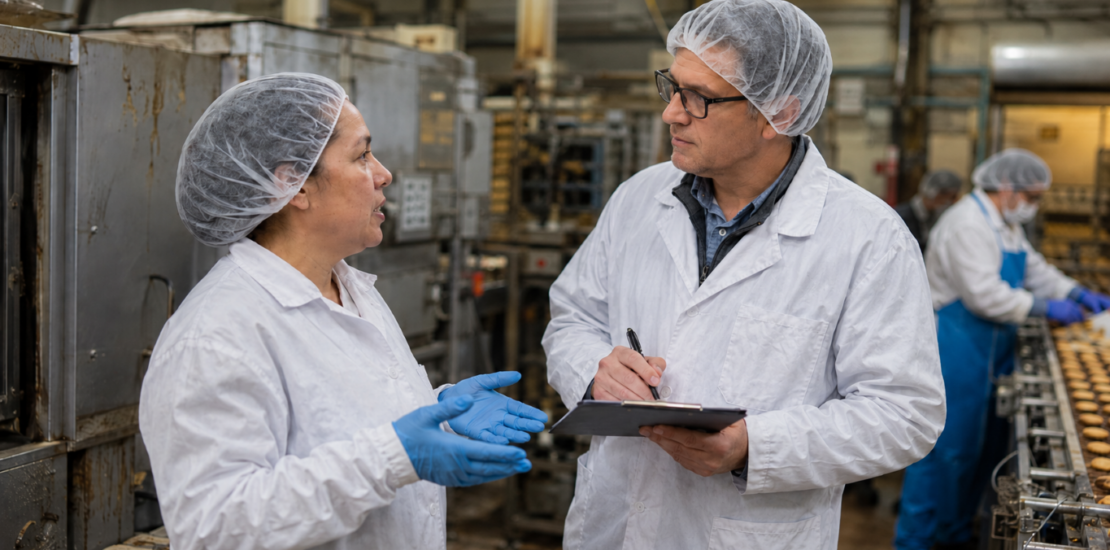
In many food businesses, the internal audit remains a QA affair. It is scheduled, conducted and filed — and the rest of the organization treats it as background noise. The auditor walks the floor, ticks the checklist, writes up the findings, and life moves on. Until the next one.
This model is not without value. It produces records. It satisfies certification requirements. It occasionally catches something before an external auditor does. But it does not, by itself, build a safer or better-functioning operation. And the reason is simple: an audit that belongs only to QA is an audit that the organization has not truly absorbed. In fact, this sole ownership is normalized.
What a Culture of Internal Auditing Actually Requires
The shift from audit-as-procedure to audit-as-learning-mechanism is not primarily a technical one. It does not require more sophisticated checklists or more frequent scheduling. It requires something harder to systematize: active participation, shared reading of findings, open communication across departments, and genuine accountability that is distributed rather than delegated.
When a finding from the warehouse floor is discussed only within QA, it remains a QA finding. When the same finding is brought into a broader conversation — with production, with maintenance, with management — it becomes operational intelligence. The difference between the two is not in the finding itself, but in what the organization chooses to do with it.
This is where transparency becomes a functional requirement, not a cultural aspiration. If teams do not know what the audit found, they cannot contribute to understanding why it happened or how to prevent recurrence. If findings are communicated in summary form only — or not communicated at all — the organization loses the very material from which improvement is built.
The Audit as a Prevention Mechanism
In well-functioning food safety management systems, the internal audit does not wait for problems to become visible. It operates as a structured form of organizational attention — a regular, deliberate effort to look at what is actually happening, rather than what the procedures say should be happening. The gap between the two is almost always where risk lives.
This means that findings — even minor ones, even the recurring low-risk items that teams have learned to work around — carry diagnostic value. A procedure that is consistently not followed is not evidence of a discipline problem. It is evidence of a design problem, or a resource problem, or a communication problem. The audit’s job is to surface that signal. The organization’s job is to receive it without defensiveness and act on it with precision.
Prevention, in this sense, is not about adding more controls. It is about building the organizational capacity to notice early, discuss honestly and adapt continuously. The internal audit, done well, is one of the most powerful tools available for exactly that.
Productivity Is Not a Side Effect — It Is Part of the Point
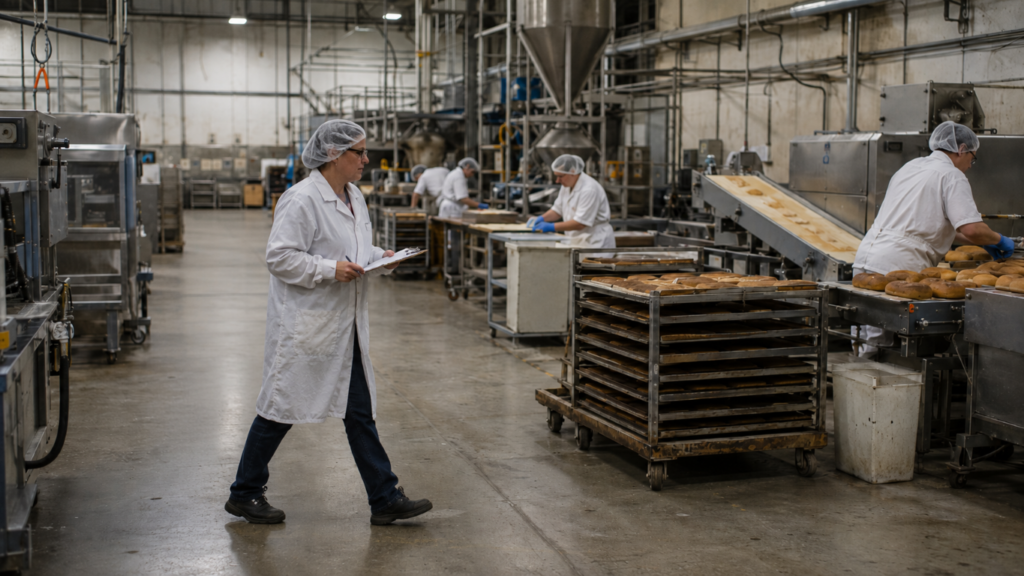
There is a persistent assumption in food businesses that Food Safety and operational productivity exist in tension — that time spent on audits and compliance is time taken away from output. This assumption dissolves when the audit culture matures.
An organization that identifies and closes a recurring deviation in its filling line does not just reduce risk. It reduces waste, downtime and rework. An organization that catches a procedural misunderstanding in cold chain management before it becomes a non-conformity does not just protect product safety. It protects efficiency, customer relationships and margin. The internal audit, when it functions as a collective learning tool rather than a compliance checkpoint, returns value far beyond its cost.
Where the Culture Is Built
None of this happens through scheduling alone. The culture of internal auditing is built in the moments between audits — in how findings are discussed, how responsibility for corrective actions is shared, how teams are involved in reviewing their own areas, and how management signals that the audit is a mechanism for improvement rather than a mechanism for blame.
Isolation — where QA carries the audit alone — produces compliance records. Participation — where findings are shared, discussed and owned across the organization — produces learning. Shared accountability — where the corrective action is not assigned but agreed upon — produces change.
The internal audit does not become a living safety and business tool because it is well-designed on paper. It becomes one when the organization around it is ready to use it honestly.


