

About

About Social Food
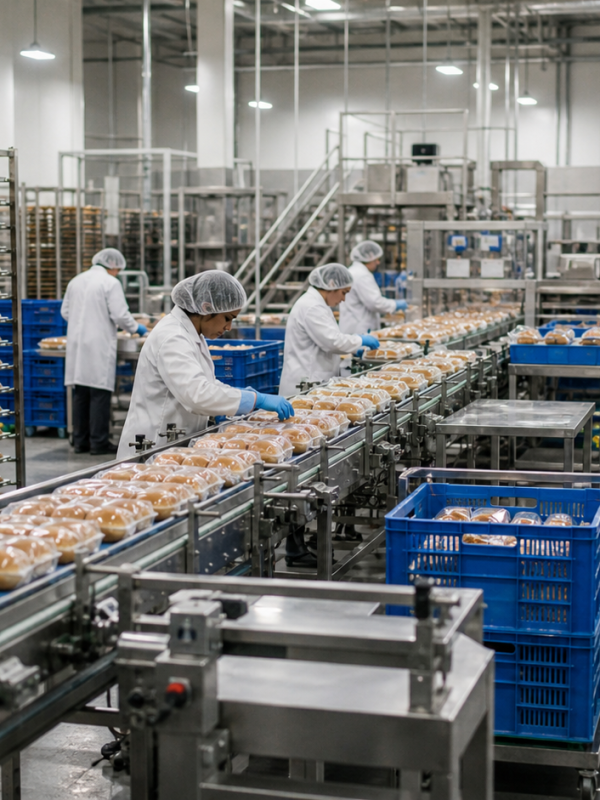
Social Food is a specialised education and consulting initiative for the food industry, based in Greece. It focuses on Food Safety Culture, professional practices in food handling environments, and the behavioural dimensions that shape how food systems operate. Through training programs, Food Safety Culture consulting services, and close collaboration with industry stakeholders, Social Food supports organisations in strengthening responsible food practices and improving day-to-day operational decision-making. Its educational activities in the field of Food Safety Culture are accredited by EIT Food.
In addition, Social Food draws on insights from Science and Technology Studies (STS) to understand food safety practices within their broader social context. From this perspective, Food Safety Culture is not seen solely as an internal organisational matter, but as part of a wider social framework in which food businesses operate. Norms, responsibilities, professional practices, and institutional expectations circulating in society all shape behaviours within food production environments.
By recognising the factory as embedded in this broader societal system, Social Food develops Food Safety Culture approaches that are grounded in real-world conditions and designed to enable more meaningful and sustainable organisational change.
What We Stand For
Food Safety Culture is not an abstract concept, but a management system embedded in governance, accountability, and everyday operational decision-making. At Social Food, we approach food safety as an integrated organisational structure, where processes, behaviours, and responsibilities are closely interconnected.
Systems become reliable only when they are clearly understood, consistently monitored, and actively reinforced by leadership. For this reason, our focus goes beyond short-term improvements in compliance. Our objective is to support organisations in achieving measurable and sustained operational stability, grounded in clarity, responsibility, and informed decision-making.
Social Food combines hands-on industry experience with a structured understanding of risk-based management and organisational behaviour. Its work is grounded in direct engagement with production and quality environments, supported by clear educational methodologies and close collaboration across leadership functions.
At the same time, Social Food actively participates in the broader European dialogue on Food Safety Culture, contributing to the ongoing development of the field. As an EIT Food Accredited Training Provider, it supports structured educational initiatives across the wider European ecosystem.
This combination allows Social Food to remain firmly rooted in the realities of food production, while drawing on established scientific and managerial frameworks to deliver approaches that are both practical and robust.
Social Food actively contributes to the broader professional and ethical dialogue shaping the future of Food Safety Culture. This includes participation in international initiatives such as the Technical Working Group (TWG) on Ethics in Food Safety Management, coordinated by the Global Harmonization Initiative.
Through this engagement, Social Food remains connected to evolving discussions around ethics, responsibility, and governance in food safety, ensuring that its work reflects not only operational needs but also the wider expectations placed on the food industry. This ongoing involvement strengthens its ability to integrate ethical considerations into practical, organisation-level Food Safety Culture approaches
Food production environments are continuously evolving, with technology and data playing an increasingly important role in monitoring, communication, and structured learning. However, technological advancement alone does not create reliable systems. Cultural alignment must come first.
At Social Food, digital tools are approached as enabling mechanisms — tools that support, enhance, and scale existing practices, but never replace leadership accountability or organisational responsibility. Technology can strengthen Food Safety Culture, but only when it is built on a foundation of clarity, trust, and shared understanding.
In collaboration with CERTH spin-off Complago, we are bringing together complementary expertise to develop and pilot solutions in Food Safety Culture Technology. These initiatives aim to explore how data-driven tools can meaningfully support behavioural insight, communication, and decision-making in real production environments.
If you are interested in exploring how these approaches could apply to your organisation, we invite you to connect with us and schedule a short pitch session to discuss potential collaboration.


Collaboration with eit Food
Social Food is an EIT Food Accredited Training Provider, part of a European initiative supported by the European Institute of Innovation & Technology (EIT), a body of the European Union.
This collaboration reflects alignment with structured European frameworks that promote innovation, education, and sustainable food systems.
Within this context, Social Food contributes to the development and delivery of structured training initiatives focused on Food Safety Culture, operational maturity, and risk-based thinking in food production environments.
Participation in the EIT Food network strengthens:
-
Methodological rigor
-
Cross-border knowledge exchange
-
Access to European-level dialogue
-
Alignment with emerging food system priorities
This collaboration reinforces our commitment to measurable, structured, and future-oriented Food Safety Culture development.

Our story
-
2006
Early Foundations
Professional engagement with food production environments begins, with a strong focus on quality systems, operational discipline, and risk-based food safety practices within industrial settings.
-
2012
First Food Safety Awareness Initiatives
Initial seminars and internal workshops explore how risk is perceived and managed within real production environments, marking the first step beyond purely technical approaches.
-
2019
First Food Safety Culture Initiatives
Early seminars begin to examine the relationship between leadership behavior, team dynamics, and food safety outcomes, introducing a cultural perspective into industrial practice.
-
2022
Development of a Structured Methodology
Practical experience and research converge into a structured approach to Food Safety Culture, integrating operational practice with insights from organizational behavior and risk management.
-
2023
Expanding Perspective through Social Sciences
Interdisciplinary studies in the Social Studies of Technology introduce a broader perspective, connecting food safety with social dynamics, human behavior, and systemic thinking.
-
2024
Pilot Testing & Validation
Educational programs are tested and refined through EIT Food sessions, allowing the methodology to be applied, evaluated, and improved in real learning environments.
-
2025
Launch of Social Food
Social Food is formally established with a clear objective: to help organizations move beyond compliance and build measurable Food Safety Culture within real production environments.
-
2025
Collaboration with EIT Food
Social Food becomes an EIT Food Accredited Training Provider, contributing to European initiatives focused on education, innovation, and sustainable food systems.
-
2025
Expansion of Educational Programs
Structured seminars and training programs are developed for professionals across all levels of food production, with a focus on cultural maturity and practical application.
-
2026
International Collaboration
Educational programs and professional dialogue expand beyond Greece, connecting food safety professionals across multiple European regions through the EIT Food Educational Platform.
-
2026
Integrated Education, Training & Consulting Model
Social Food strengthens its combined consultancy and learning approach, supporting organizations in embedding Food Safety Culture into operational systems and leadership processes.
-
TODAY
Social Food continues to support food production organizations seeking long-term operational stability, measurable culture maturity, and leadership-driven food safety systems.
Meet our team

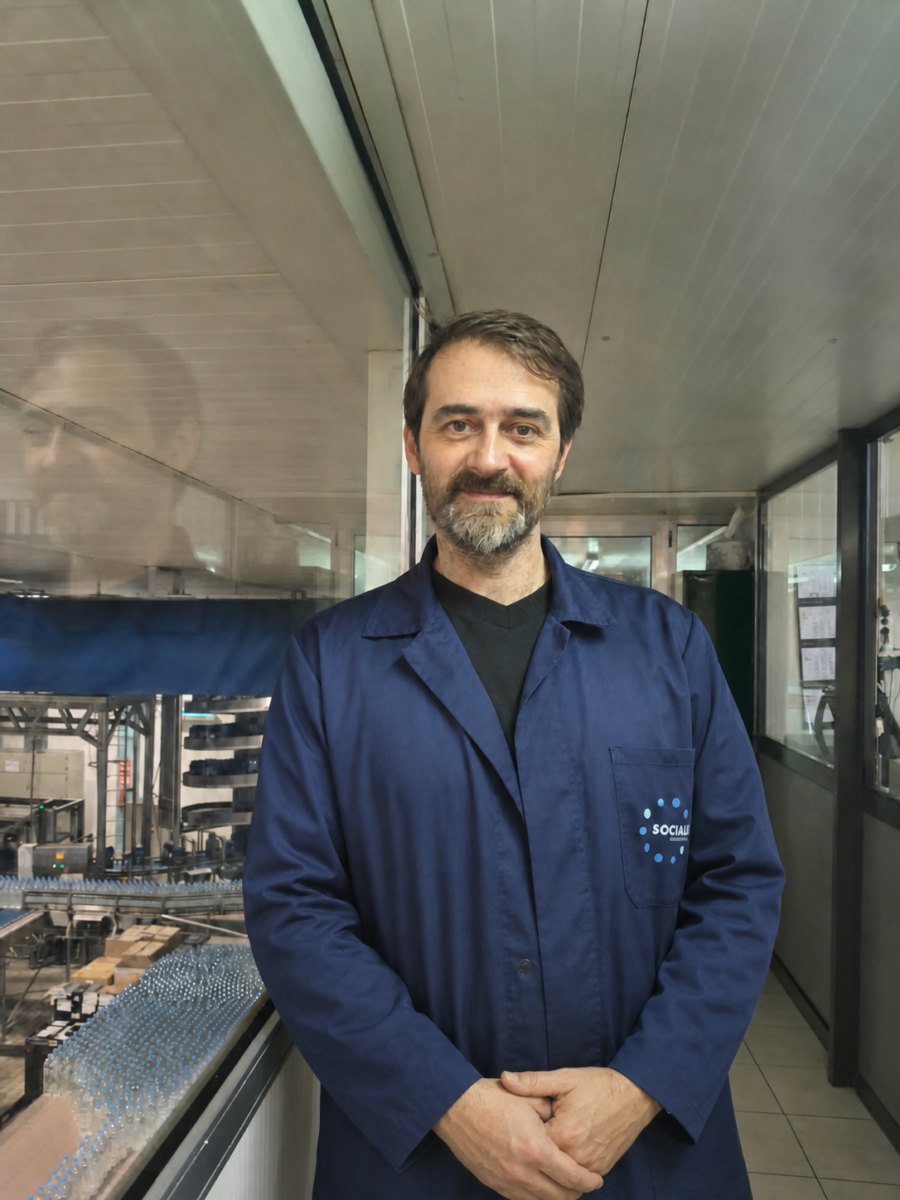
Thanasis Stathopoulos
Clients Feedback
The seminar provided useful and practical insights on the topic, especially through examples. It helped me better understand the subject and how it can be applied in practice.
The POV changed after the seminar. Useful information. Building a strong base for company’s FSC strategy.
Food safety culture is not static; it requires ongoing assessment and improvement. Regular training sessions, audits, and feedback loops help keep food safety at the forefront of everyone’s mind. The seminar highlighted that cultivating a strong food safety culture is a continuous, organization-wide effort that requires dedication, communication, and a proactive mindset.
Structured Collaboration
We collaborate with organizations prepared for reflection, alignment, and sustained improvement.
If your objective is long-term operational confidence, a structured discussion is the appropriate first step.

